Introduction
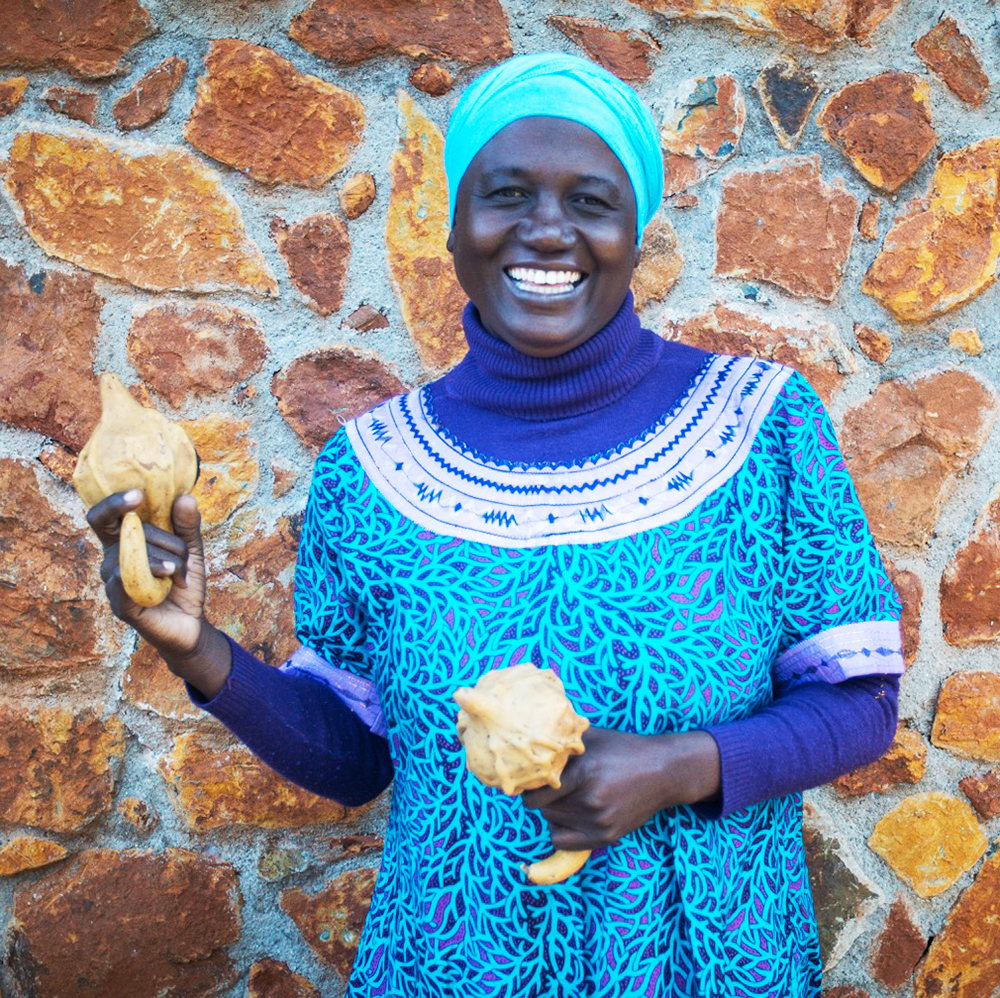
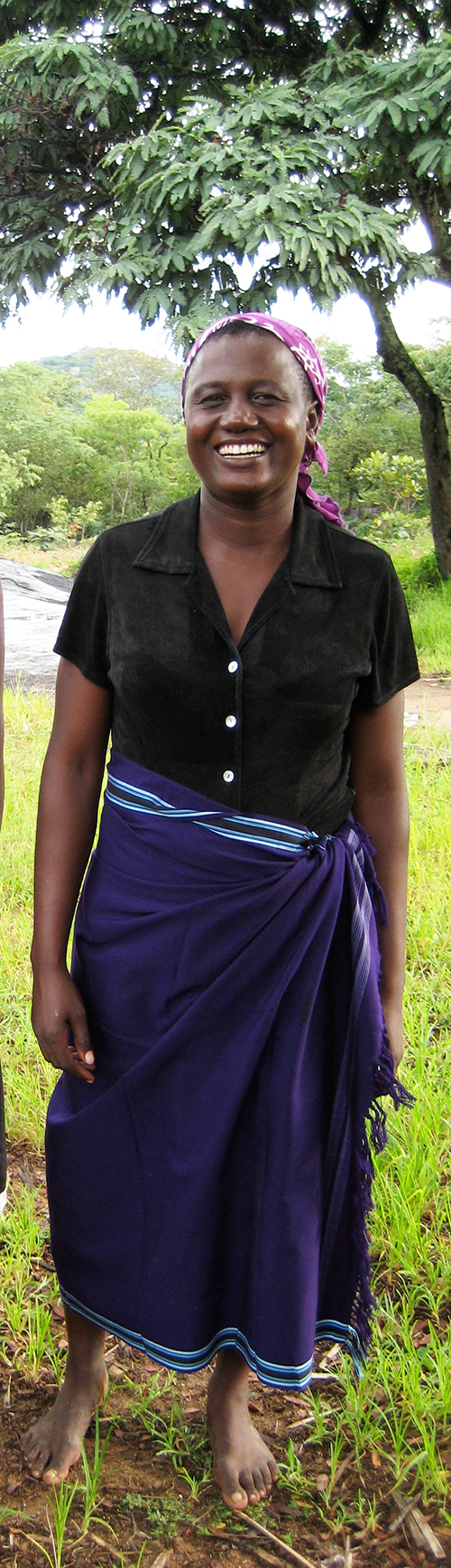
Patience Chaitezvi Munjeri is one of the very few Zimbabwean women who grew up playing mbira regularly in traditional ceremonies, a role more commonly held by men in Shona culture. Patience is also an accomplished traditional dancer. As a university-educated and fluently Shona-English bilingual musician and cultural expert, she is uniquely suited to sharing traditional Shona music, dance, culture, and her experience as a female musician, with the world.
Recordings and Books Available From MBIRA
Recordings
Listen to samples of her albums.
Books
- 35005 Mapira: Shona Ceremonies (Book or Download)
- 35001 Shona Lessons for Mbira Students (Book and CD, or Download)
Video Lessons
- 35900 Mbira-Style Hosho Video Lessons
- 35901 Chigwaya Singing Video Lessons
- 35990 Mbira Dance Lessons Level 1
- 35991 Mbira Dance Lessons Level 2
Video
Biography
(written by Denver Banda based on a 2007 interview, edited and updated by Erica Azim)
Early Life

Patience Chaitezvi was born in in the town of Bindura, Zimbabwe, and is the sixth child in a family of five boys and four girls, with an absent father. As Patience and her siblings grew up, they lived both in Chiweshe at their mother’s rural home, and the Canaan area of Highfields, in the capital city of Harare.
Patience’s mother is a traditional healer and spirit medium, and would request that mbira music be played in her healing sessions. In this environment, Patience grew up immersed in traditional music.
Learning Mbira
In 1982, when she was in grade 5, Patience learned to play mbira by observing what her older brother Christopher did on the mbira. She observed how his thumbs moved on the mbira, listened to the sound of the instrument, and then tried it out on her own.
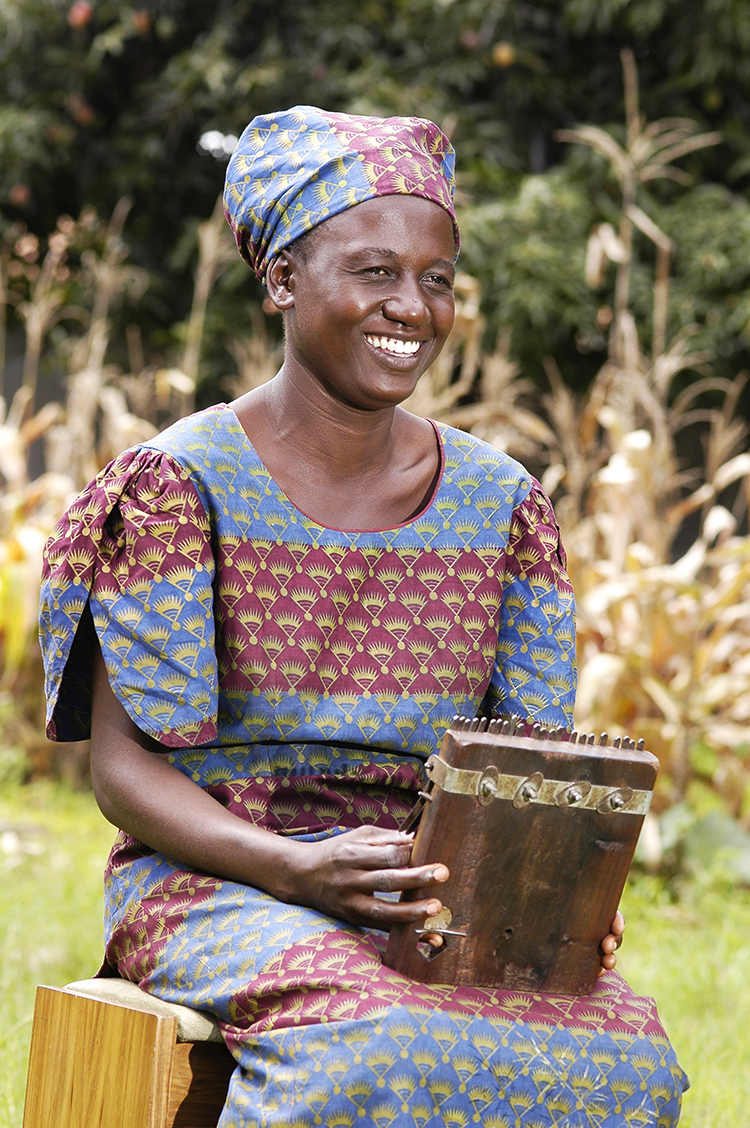
The first mbira Patience played was made by Chris Mhlanga, an mbira maker who lived close by. Later her brother bought her mbiras made by Josephat Mandaza, and they are the ones that she still uses.
The first song Patience learned was Mahororo, and she played the kushaura part, while her brother Chris would sing and play kutsinhira. Her quick hand and keen ear earned her lots of love and respect from her brother, who referred to her as his “favorite sister”. With time, she enlarged her repertoire under the tutelage of her big brother.
Patience’s mother was ecstatic to have her daughter playing mbira. Chris and Patience played for the mashave spirits of patients who came to their mother for help, and also for their mother’s own spirits. People were interested in seeing a young girl playing mbira; they would look at Patience in amazement and wonder, in awe at her age. They encouraged her to nurture her talents. Patience had small hands, but she got used to the big instruments her brother played from an early age.
Playing Mbira in Bira Ceremonies
By the time she was in grade 6, Patience was playing in bira ceremonies for ancestral spirits with her brother. As a young girl, she was given time to rest. She would play at the beginning of the ceremony, rest, and then play in the early hours of the morning. Chris taught her to sing Mahororo but, because of her small voice, she was shy to sing.
“I was shy when it came to singing, my age mates called me Ambuya Stella Chiweshe and I did not like it. Embarrassed, I usually hid my face in the deze (mbira resonator) when I sang. Things changed when I went to Mutepairi village in the Mt. Darwin area. There was an old woman who lamented that my playing and singing was the best she had heard in a long time, and she wanted to see my face. I came out confident and, as a token of appreciation, she gave me a live chicken and a bar of soap. From then on, I do sing when the chance affords itself.”
Hiding Mbira at School
Patience attended a Catholic high school in Nyanga, followed by a public high school in Harare, then finished her A Levels (post-secondary) at Howard Mission in Chiweshe. Patience was one of the first students at the Methodist-run Africa University in 1992. At school, noone knew that Patience played mbira except for her close friends. She needed to keep a low profile as an mbira player at the church-run institution, but the traditional music streak got the better of her when there was a cultural exhibition during her 2nd year of university. Patience danced, much to the amazement of her university peers.
Drumming and Dancing
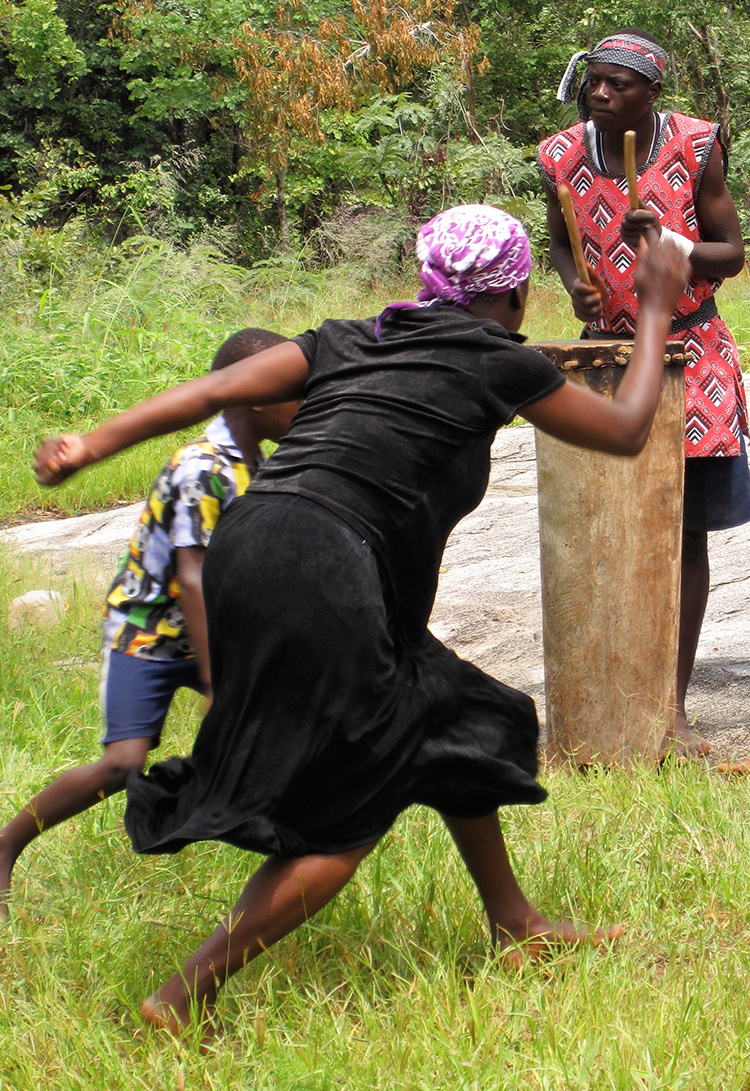
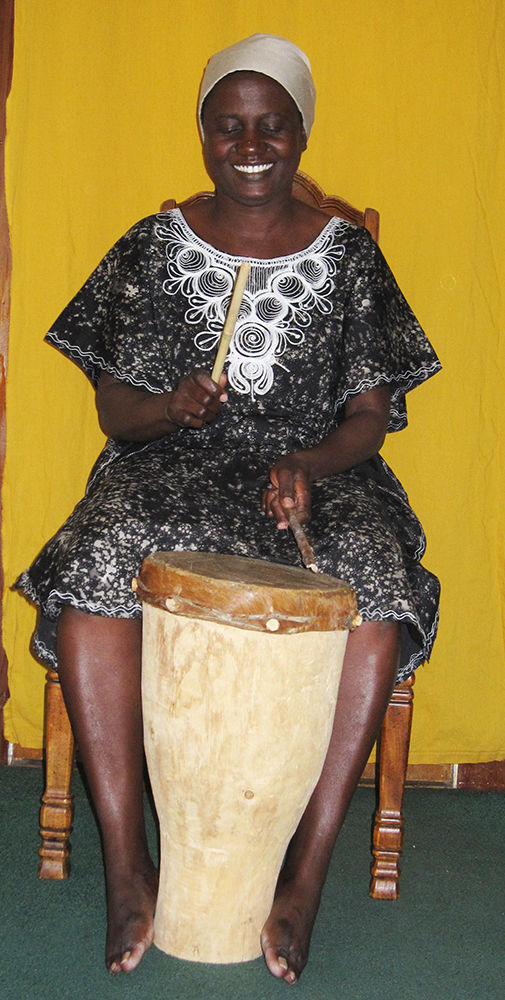
An excellent dancer, Patience says, “There were ceremonies that we attended where the spirits came through ngoma dzemadandanda (drums) and Chris knew how to play the big bass drum. He taught me how to play the mhito drum, the lead drum which determines the pace. The second drum would tsinhira (play an interlocking part), and harmony was achieved when the people sang songs that went with the drumbeat. When the mood was right, I would dance, joining in with the other participants.”
Family Mbira Playing
Patience played as a duo with her brother Chris for a long time, but when she went to boarding school, Chris started to play mbira with his cousin-brother Cleopas, and brother Endiby. During school holidays, Patience played mbira together with Chris and Endiby. She would play kushaura, Endiby would play mid-range and Chris would play kutsinhira. The group was an explosive mix of interlocking patterns and symbiotic octaves. To achieve this, Patience notes,
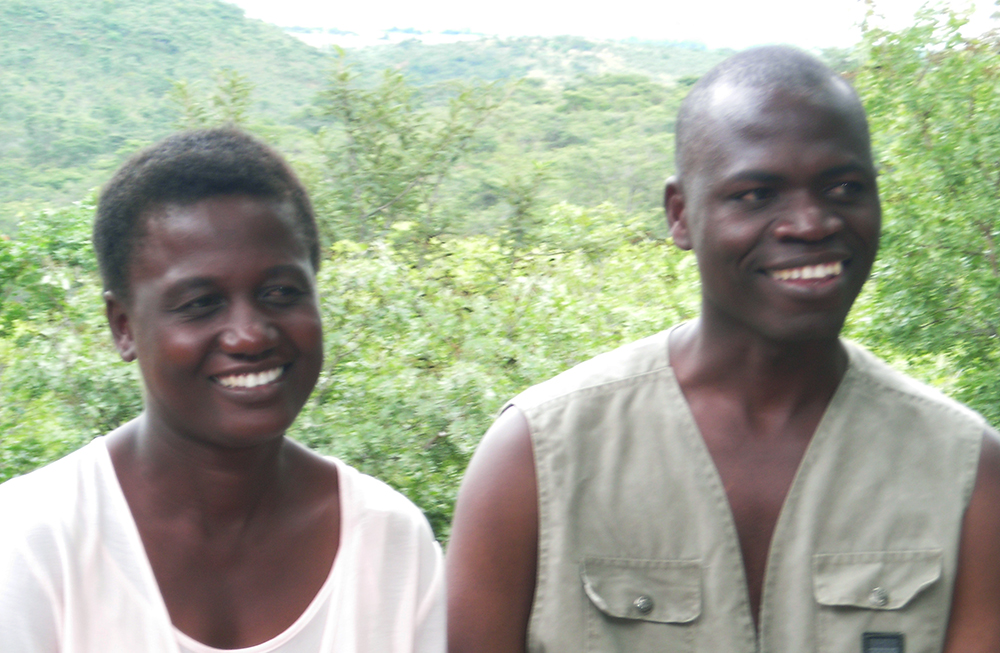
“Chris taught us kutandana which is the idea of following behind another player’s recently struck keys to create an echo effect with the instrument.”
Playing with her brothers had its advantages, in that Patience was protected from unruly participants in the ceremonies they attended. Chris was a karate enthusiast and a bouncer, who ensured that ceremonies were not disrupted by people who had too much to drink. Patience was not worried about the money they earned playing mbira at ceremonies. Her brother took all the money, and as a young girl she had no use for the money. Later on, she would buy clothes or have her mother take her share of the proceeds.
Cleopas, who played with her brothers, suddenly became proud and uncooperative when they had ceremony commitments. As members of the Mhofu-Shava Museyamwa (Eland) totem, Chris, Endiby and Patience met Forward Kwenda, who shares the same totem. The relationship through their totem strengthened their connection as musicians, and Forward took the place Cleopas had. Forward Kwenda, an mbira virtuoso, introduced Patience and her brothers to the mavembe tuning. Forward would come to play mbira with Chris, and would also teach Patience songs to play on the mavembe mbira. In return, Chris taught Forward how to drive. Chris and Forward became very close and they recorded together when Patience was away at school.
Turning Away From Mbira
Disaster struck the Chaitezvi family, and their lives have never been the same since…In 1996, after a successful mbira tour of Australia, Chris came home with a nice van. Ironically, he was involved in an accident in that van that claimed his life, as well as three other family members’. The disaster affected everyone in the family, especially Patience, who blamed the mbira for the accident and for their deaths, and stopped playing mbira for years.
“After the deaths of my brothers and nephew, I did not want anything to do with mbira. The spirits and ancestors had let me down, and every time I heard mbira, I was reminded of Chris’s kutsinhira — this was too much for me to bear.”
Coming Back to Mbira
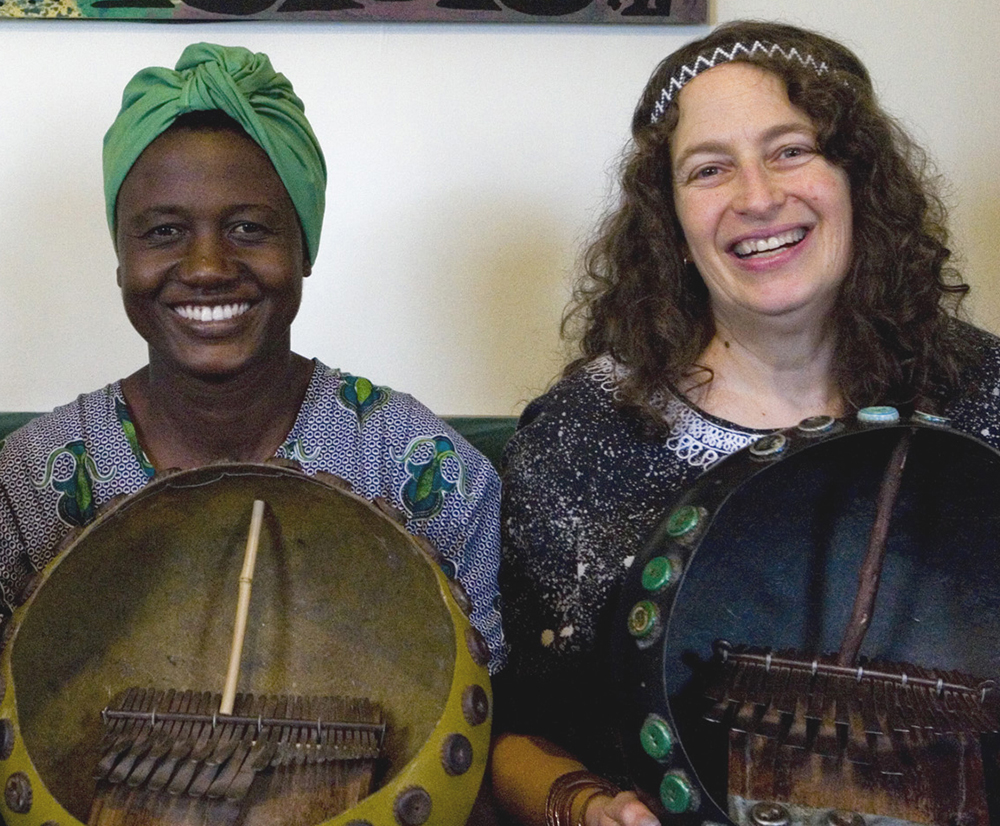
The road to recovery was a difficult one for Patience. Through encouragement from Erica Azim, her mother, and her brother Endiby, Patience started playing mbira again.
On understanding mbira, Patience notes that there is much involvement of the spiritual realm and that it is not of our own doing that we get to play.
“I failed to play mbira for a year and the spirits and shave needed appeasement. It was then that we held a matendo ceremony where ceremonial cloth was bought and beer was brewed. Afterwards, I understood the importance of the spirit world and that some things happen for some reasons.”
After Chris died, Patience began having dreams of her first mbira, and on it old and new compositions were being played. When the ceremony was held, she was ready to play her mbira with Endiby again.

Mbira as a Way of Life
Patience feels that the old music is the most important part of mbira, in that, “Our elders associated it with their way of life. When one plays, the music takes them away,” Patience relates with a far away look. She notes that the music is a way of life, a way of calling others in the nether world: “I remember when I went to Chimbikiza-Dzivaguru in Chiweshe, where there are mhondoro spirits and the musicians there are very old men, we did not wear any shoes. There the music invoked the spirits’ powers in asking for rain, and protection from famine and other calamities. The music was also used as a mode to facilitate communication and consultation between the spirit mediums and the ancestors.”
Asked about how she feels about the new styles of mbira playing, Patience has this to say,
“Many of the new styles are just a commercial entity without real depth. I do listen to (them) just for the ear and not for serious traditional business…Some (lead people to) associate mbira with being backward, unkempt and uncultured. The reality is that Christians are looking down on mbira and traditional culture, and we need the best ambassadors there are.”
Women Mbira Players
Though women mbira players are rare in Zimbabwe, Patience says, “Women’s empowerment is key in this music, I saw that when I played as a young girl at Dzivaguru, because the spirit mediums liked the way I played, and to me that was a stepping stone in empowering women through mbira”
Teaching High School
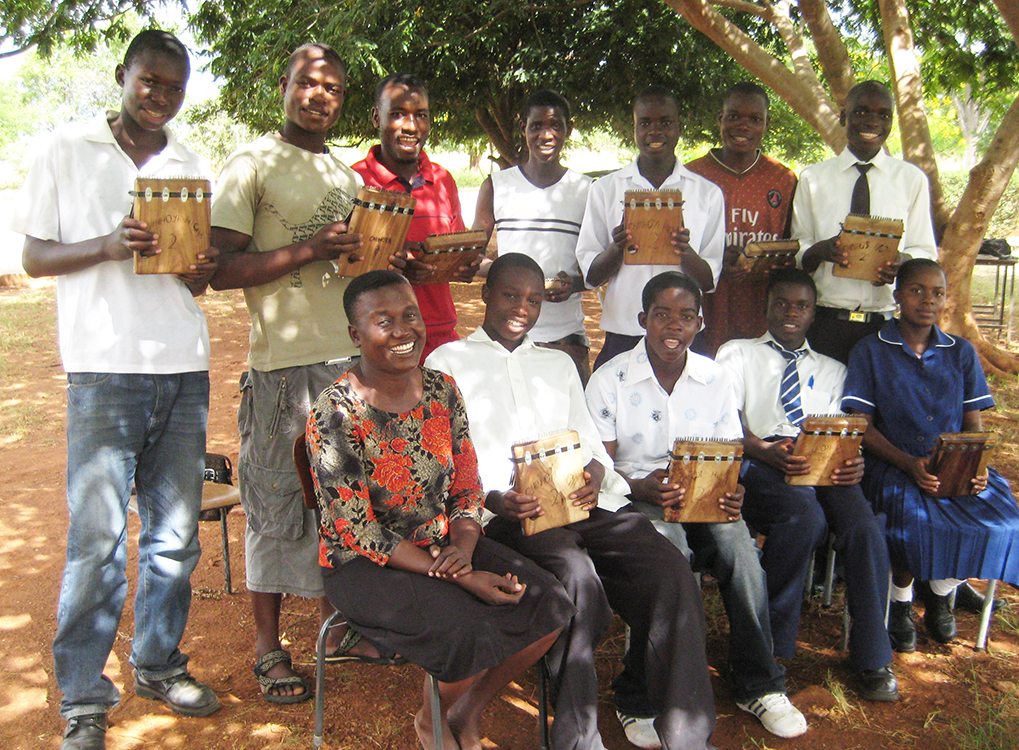
Until recently, Patience was a high school teacher in the town of Chinhoyi. She is now planning to open her own school. She has taught history, and was in charge of the school’s cultural hut — an attempt to teach the students to appreciate their culture and its music.
She has also been teaching some of her relatives to play mbira, particularly her son Lionel and the children of her brothers who died in the accident.
One of the only university-educated traditional mbira players in Zimbabwe, Patience holds a BA in Divinity with a specialty in comparative religion. She has detailed knowledge of the contrasts between Christianity and other world religions, and traditional Shona religion. Completely bilingual and extremely articulate, Patience enjoys sharing her culture as well as her music. She wrote the book Mapira: Shona Ceremonies to share her knowledge, as well a book of Shona (language) lessons for mbira students.

Playing Partners, Teachers, and US Tours
Patience played mbira with her brother Endiby, often playing in weekend ceremonies, until his death in 2010.
After the deaths of the brothers who taught her to play mbira, Patience studied with other mbira masters, including Silas Madziva and ‘Samaita’ Vitalis Botsa.
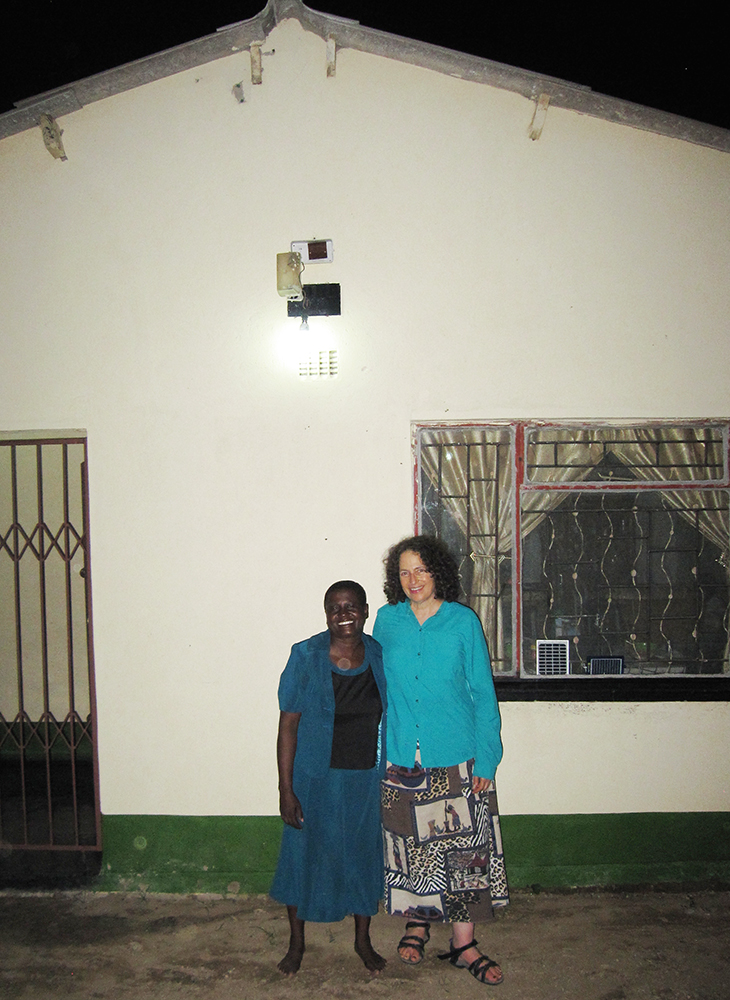
She toured the US in 2008 with the all-women mbira group Vakaranga Venharetare: Women of the Spirits, which included Jenny Muchumi and Erica Azim. Patience returned to the US in 2009 for a successful tour throughout the US with Erica Azim, and used the proceeds to build the house shown below. She now typically does solo US tours every 2 years.