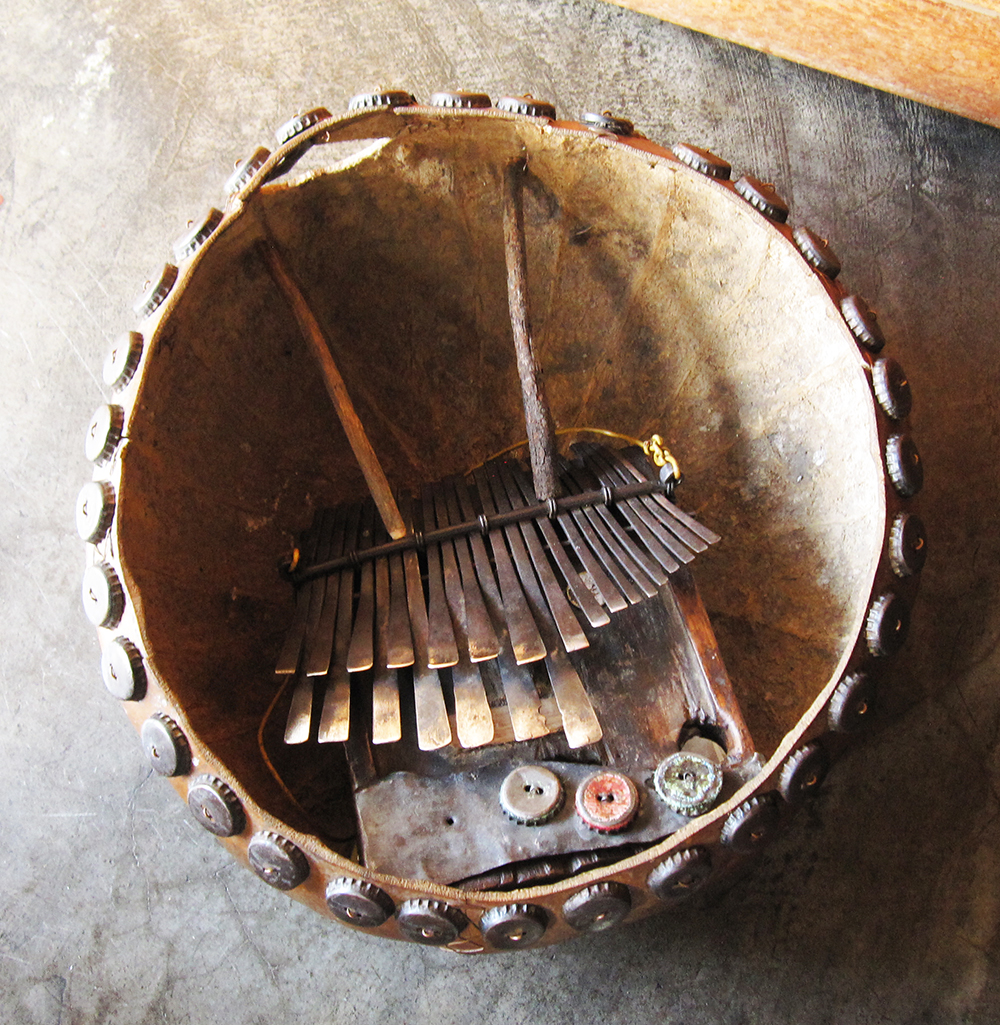
General
In Zimbabwe, a Shona mbira piece consists of a basic cyclical pattern which includes numerous intertwined melodies, often with contrasting and syncopated rhythms. There are extensive possibilities for rhythmic and melodic variation within the traditional improvisational style. Each performance of an mbira piece is unique in a way similar to the jazz master’s performance – the identity of the piece is clear, the musician’s typical style is evident, yet the performance is fresh, new, unexpected, and totally expressive of the present moment.
Interlocking parts
When two mbiras are played together, the interlocking parts result in a compact yet overflowing richness of polyphony and polyrhythm. Each piece in the traditional repertoire includes a kushaura (leading) part and a kutsinhira (intertwining) part. Occasionally 3 or more mbiras will be played together, with each playing a different interlocking part.
No beginning or end
No part of the cycle of the piece is identified as the beginning by all musicians. The kushaura musician starts playing his mbira part at the point in the cycle that he hears at that moment. After a few notes or cycles, the kutsinhira player enters at the point in the cycle that he hears – possibly a completely different point from the one where the kushaura player began, but the interlock of the two parts is fixed and must be correct. The end of a performance may also be placed at any point in the cycle, and can be either abrupt or a fade-out.

Mbira players often find that they hear mbira continuously, even when the instrument is not actually being played, both when awake and while dreaming. So, the start of a performance is merely joining with the music already being heard.
Hosho and singing
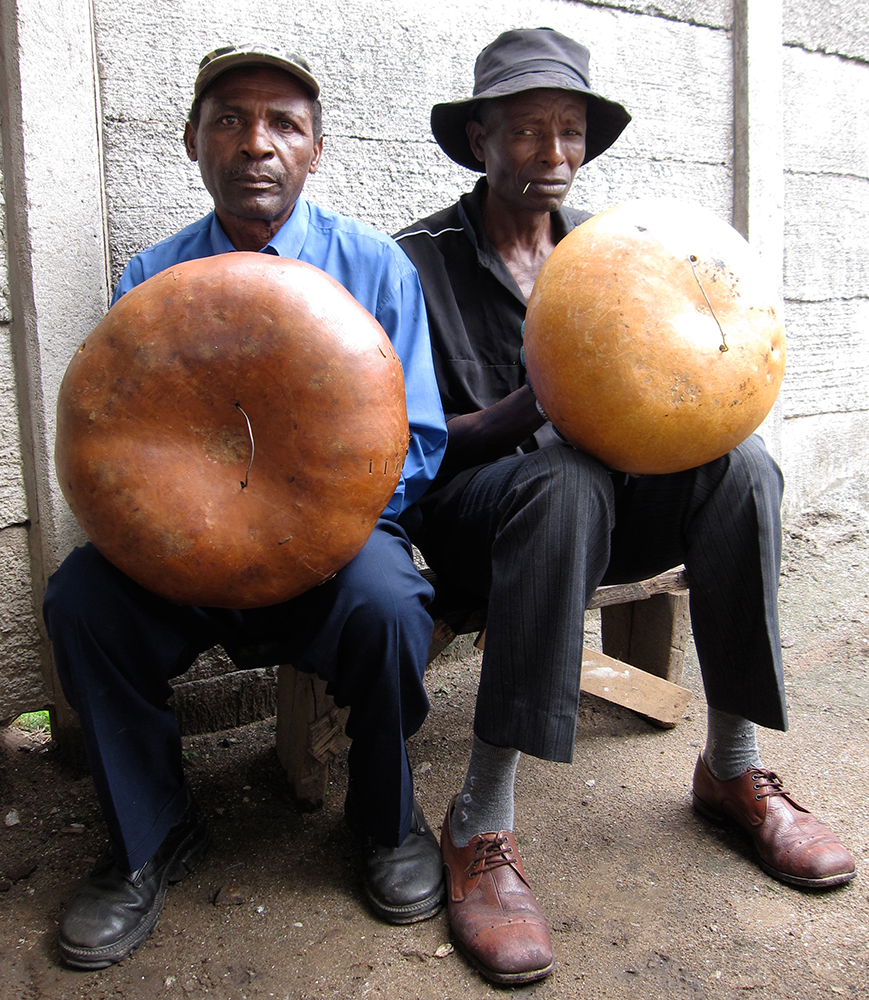
Hosho, a pair of gourd rattles playing a consistent rhythm, complete the mbira ensemble, usually starting after the mbira players. In some areas, a drum played softly may also be included.
Singing may be added by the mbira players and/or others present.
Solo style
In rare instances, a virtuoso mbira performer will perform at ceremonies alone. This requires an extremely complex solo style which leaves the musician and listeners satisfied that both kushaura and kutsinhira are present. This type of solo style is very specific to the individual musician.

Mbira repertoire
Traditional repertoire including hundreds of mbira pieces is passed from generation to generation, and pieces are popular today which are known to have been popular more than 700 years ago. At mapira ceremonies honoring vadzimu (ancestor spirits), pieces must be performed which were the favorites of the ancestor being called. Ceremonies for the more ancient and powerful mhondoro and makombwe spirits may require the most ancient traditional styles. In this manner, the same pieces are retained in the mbira repertoire over the centuries. When a musician plays a piece new to him, it is considered a reminder from the spirits of an ancient piece dropped from the repertoire, not a composition.
Both mbira piece names, and styles of playing, vary regionally.
To hear a broad variety of styles and improvisation for one mbira piece, listen to any of MBIRA’s Mbira Piece Intensive compilations. Each includes 9 to 14 tracks from solo, duet and group recordings of musicians around Zimbabwe.