Instrument construction
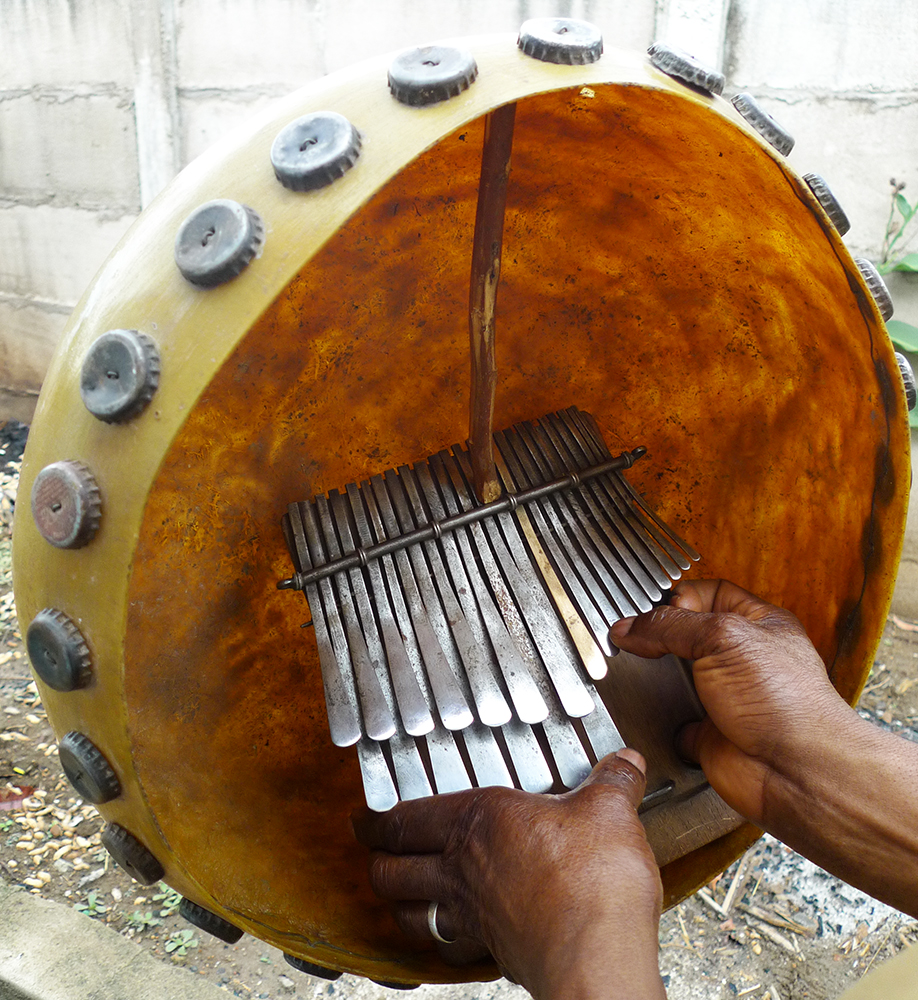
The type of mbira shown here, of the Shona people of Zimbabwe, consists of 22 to 28 metal keys mounted on a gwariva (hardwood soundboard) made from wood of the mubvamaropa tree (Pterocarpus angolensis).
Although the metal keys were originally smelted directly from rock containing iron ore, now they are made of steel from bed springs, bicycle spokes, car seat springs, and other recycled or new steel materials. Rarely, a brass or copper key may be included.
The mbira is often placed inside a large calabash resonator (deze) to amplify it, as shown above. A mutsigo (small stick) is used to wedge the mbira securely inside the deze. Due to recurrent droughts, the deze is now often made of yellow or black fiberglass molded on a calabash deze.
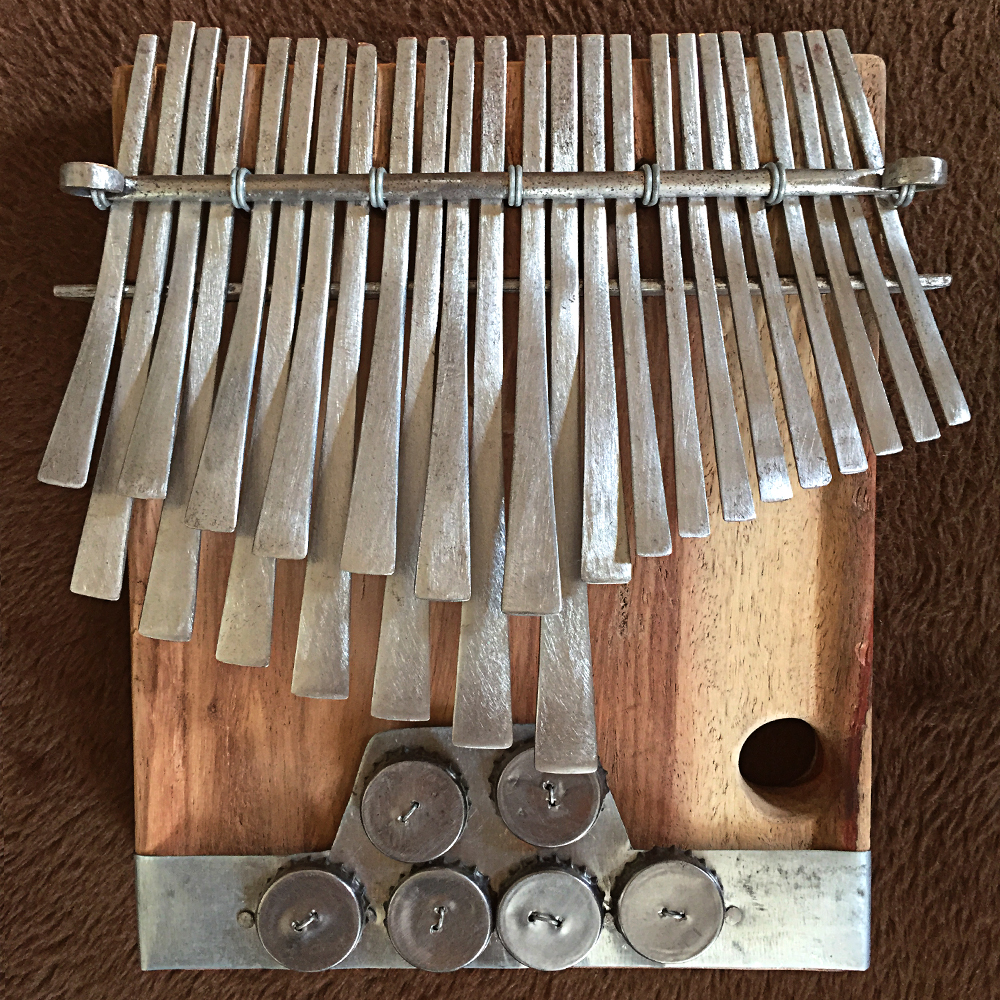
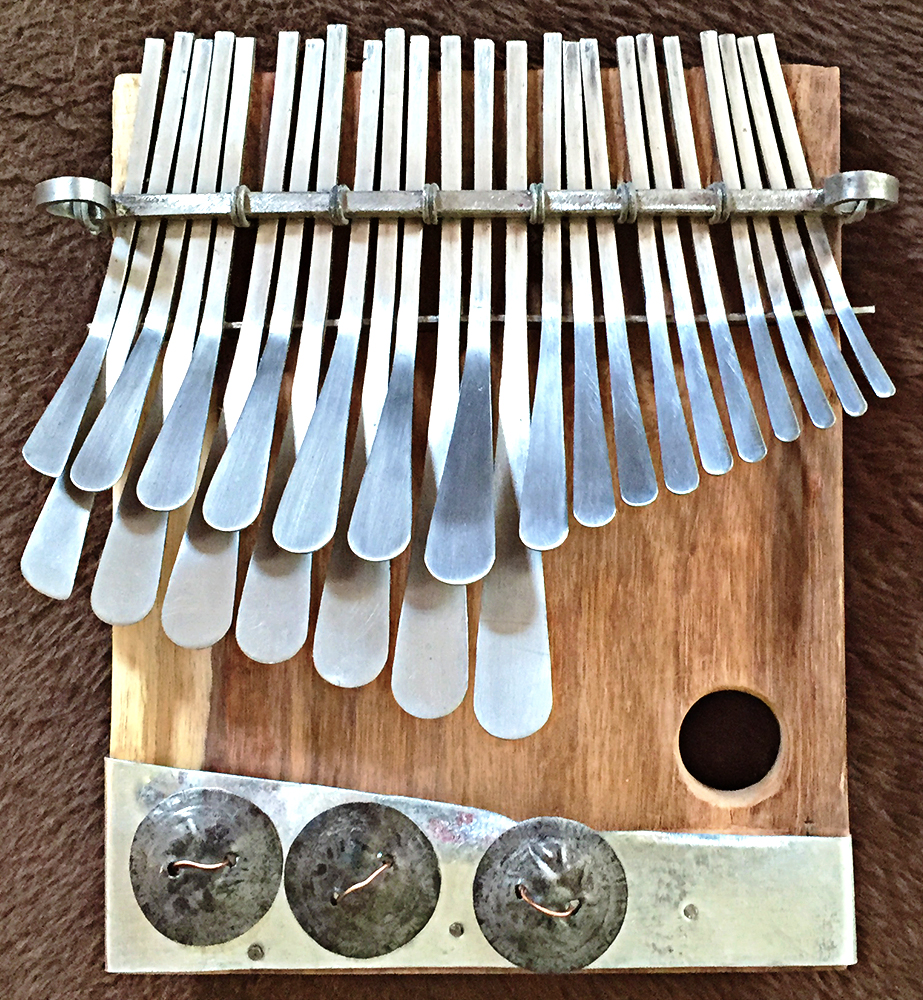
Either metal beads strung on a wire, or bottle tops/shells/other shakers mounted on a metal plate, are placed on the lower portion of the mbira soundboard to add a buzz which varies from a soft shimmering hiss to a tambourine-like sound. Bottle tops or shells are also mounted on the deze to increase the texture of the tone.
Photos of mbira makers constructing instruments.
Playing technique
The mbira is played with the two thumbs stroking down and the right forefinger stroking up. Learn more about playing technique.
Shimmery buzz – why?
The buzz is considered an essential part of the mbira sound, required to clear the mind of thoughts and worries so that the music fills the consciousness of both musicians and listeners. The buzz adds depth and context to the clear tones of the mbira keys, and sometimes may be heard as whispering voices, singing, tapping, knocking, wind or rain. The buzz also increases the volume of the mbira.
Mbira tunings
Many different mbira tunings are used, and each group of villages typically has its own tuning. The pitch of an mbira is a matter of personal or regional preference, ranging from high to very low. Each instrument has a range of 3 to 3 1/2 octaves.
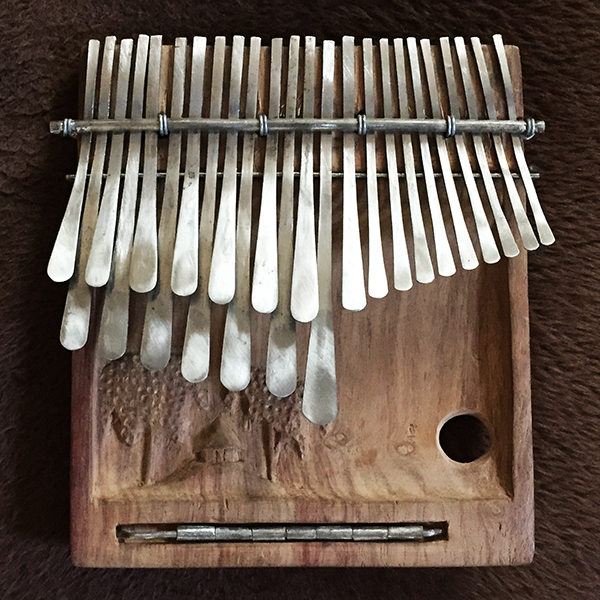
Octave relationships in the layout of the keys are consistent even when the intervals are different. The only requirement is that, traditionally, two (or more) instruments played together should have the same tuning. If the same sequence of keys is played, the music is considered to be the same mbira piece, even if played on instruments tuned with completely different intervals. For example, mavembe (the name implies that the tuning is so beautiful that it leaves you speechless) tuning has a different interval relationship between keys than the most common nyamaropa, or “straight”, tuning. The intervals on a nyamaropa, or “straight” tuning mbira, are similar to Mixolydian mode. The intervals on a mavembe, also known as gandanga, tuning mbira are similar to Phrygian mode. The same pattern of key strokes on each of these is considered to be the same mbira piece.
How to tune your mbira, and recordings of some tunings.