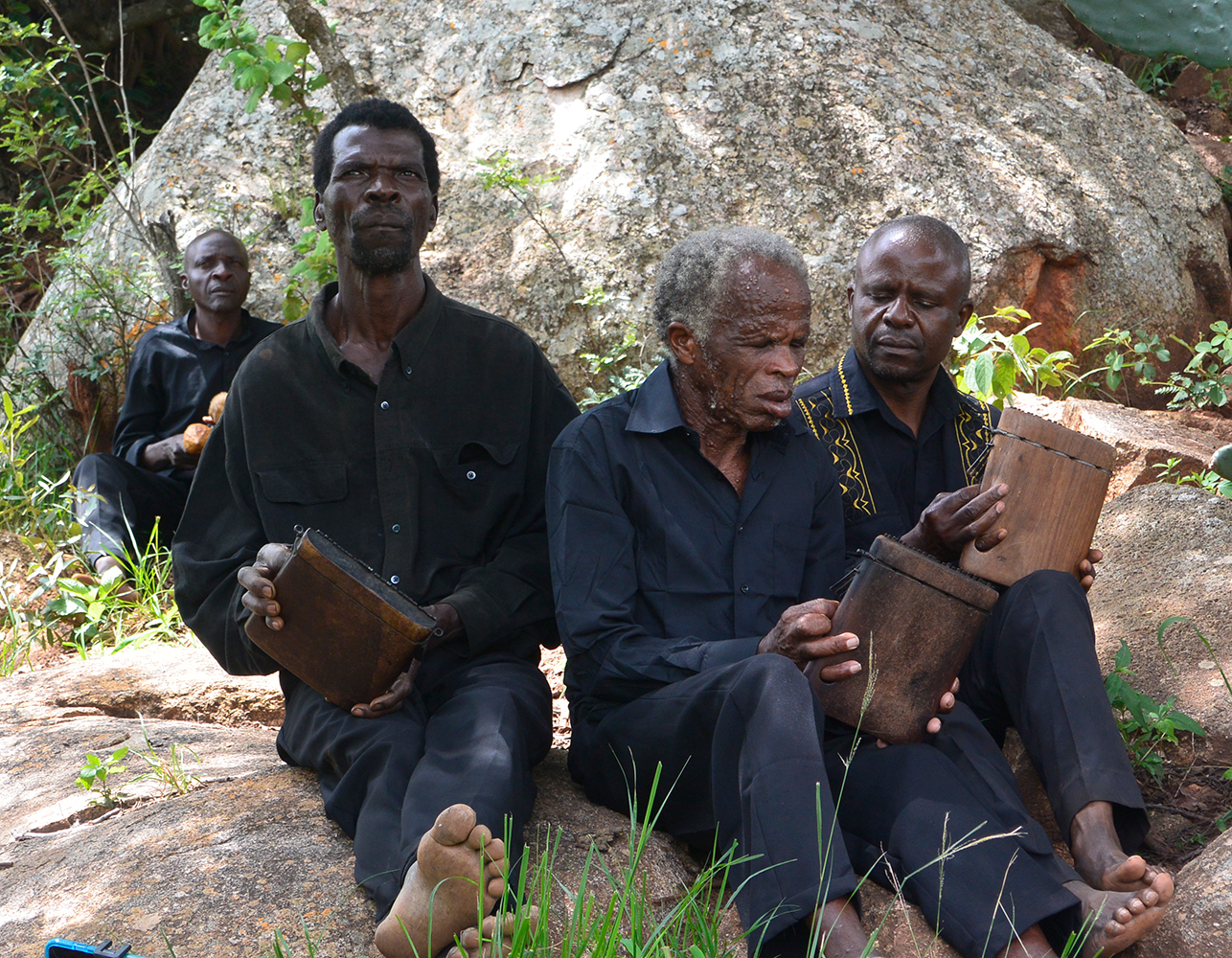
Introduction
Fungai Mujuru says:
“Mbira is not for moneymaking or play, we use it to sustain our survival through prayer. In sickness and in health, in hunger and drought, we always go back to the roots to appease the ancestors. If we stop doing it correctly, we will be handicapped. I am there to teach anyone interested in keeping the histories and traditions the way they were, and bear in mind that the mbira is not a guitar, it is holy and unifying to all.”
Recordings Available From MBIRA
Listen to samples of Fungai Mujuru’s many albums.
Video
Fungai Mujuru plays Mutamba with Dambatsoko Mbira Group in 2016
Biography
(written by Denver Banda based on a 2003 interview, edited and updated by Erica Azim)
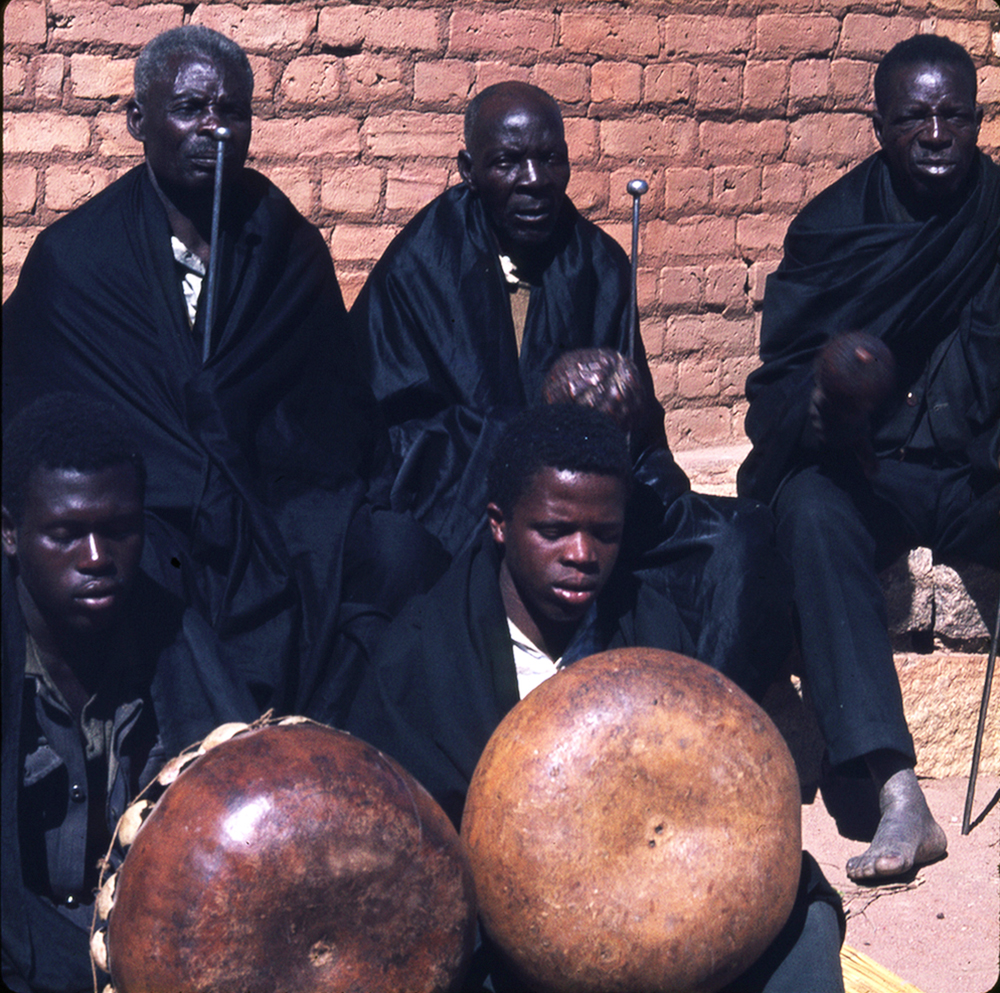
Early Mbira Player
Fungai Mujuru was born 9 August 1951 in Dewedzo, Rusape, at Dambatsoko village, also known as Mujuru village.
Muchatera Mujuru also nicknamed his son after the famed musician Zhanje who played at the court of Chaminuka, one of the most powerful Shona spirits. When Fungai was two years old, he fell ill, and this drew the family’s attention to his connection with the shave (talent spirit) of the late Zhanje.
The family nurtured and taught him how to play mbira at a very young age. Fungai’s older brother, Musekiwa Mujuru, was his first teacher and playing partner. Caspian Dumba and VaRuka, musicians from Rwizi who played at Mujuru family ceremonies, also taught him. By the time Fungai was seven years old, he was playing with the older members of the family, a thing he recalls with much joy. Fungai was having dreams of a banya (house for ceremonies) at Dambatsoko where a very old man played and he listened…in the morning, he would practice what he had dreamed.
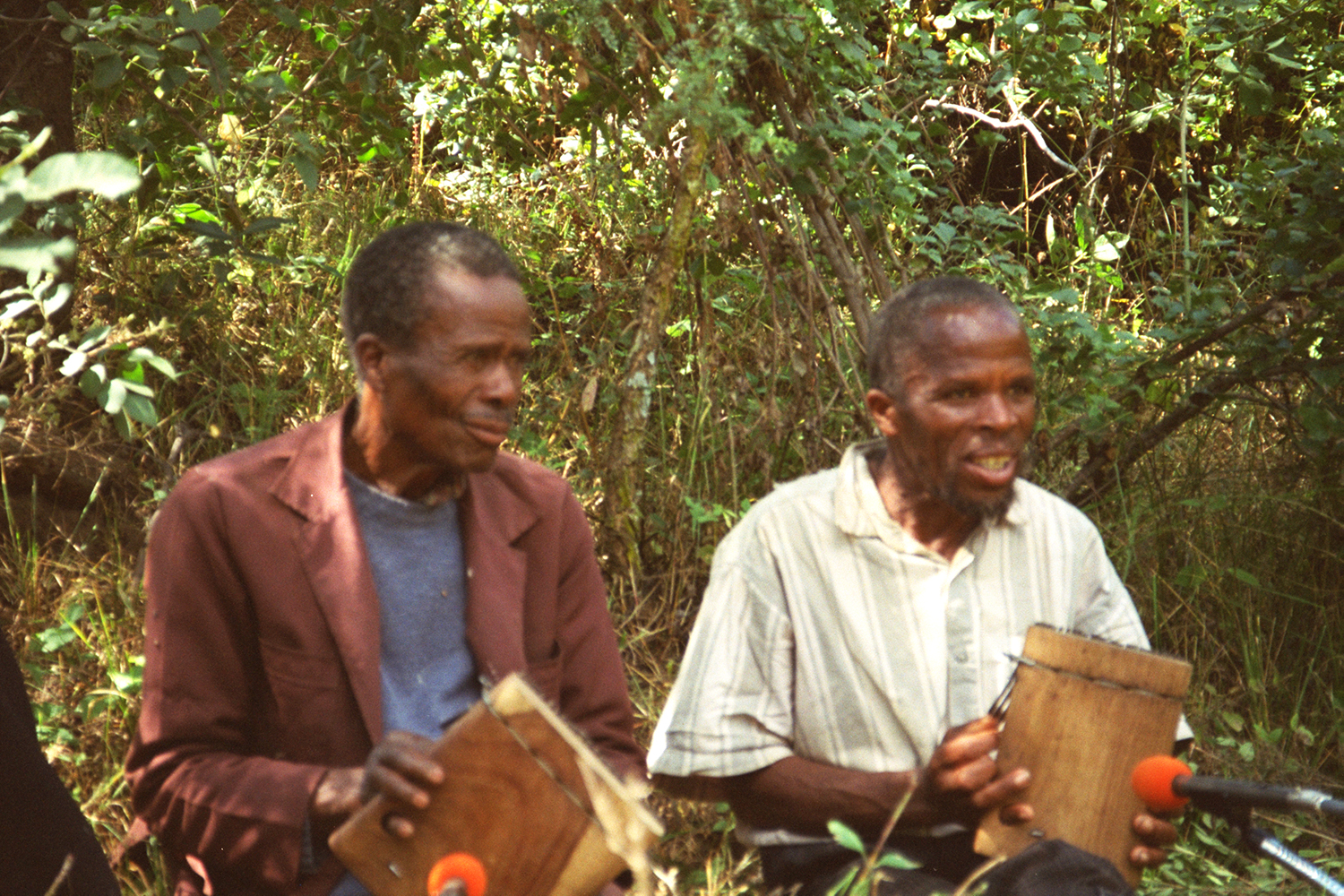
School Problems
In 1958, Fungai had a problem with his school teachers, who despised the mbira due to their indoctrination with Christianity and Western belief systems. His school grades suffered, but he found solace in the mbira. Mujuru noted that he had no favorite songs, because his shave spirit would tell him what to play. The hatred of his teachers resulted in Fungai leaving school, with the concurrence of his father. The very day he left school, he walked a great distance to his mother’s homestead, where he performed at his first bira ceremony as a serious player.
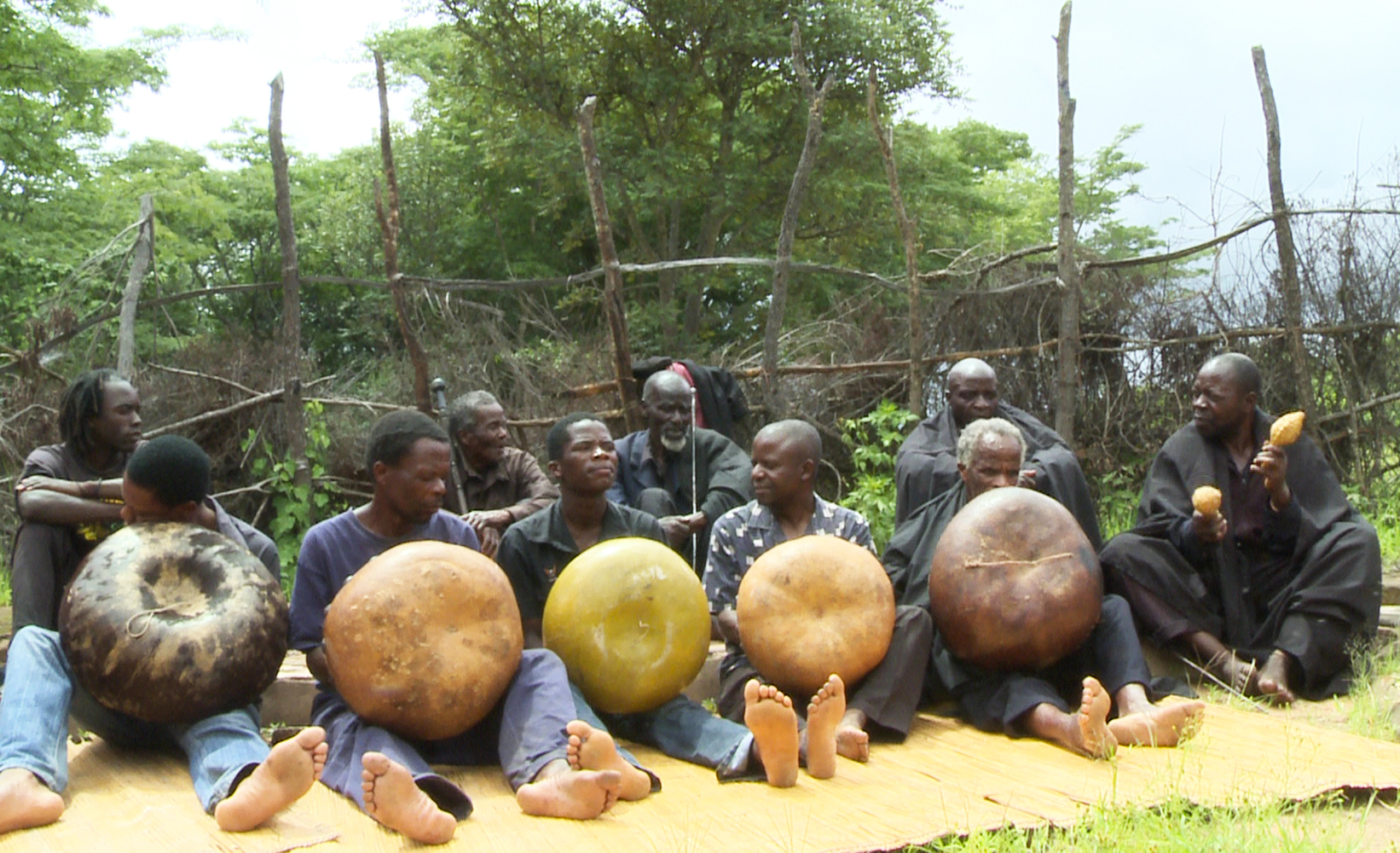
Serious with Mbira
From that time, Fungai’s father Muchatera taught him complex mbira pieces, and required him to immediately practice a new piece for 7 hours. Fungai’s dreams increased in intensity, and from them he derived the strength and tenacity to play, because they were an embodiment of his shave. In 1963, he played for a stubborn female spirit. Because he was able to bring the spirit with his mbira, Fungai was now considered an adult for his accomplishment. Fungai and his brother Musekiwa were regularly hired to play mbira at ceremonies all over the region. Fradreck, a nephew of Fungai’s, confirmed that in 1968, Fungai and his brother were summoned to play for someone who was presumed to be dead in Nyanga. When they played, this person awoke as a important spirit who remedied the problems the families were facing.
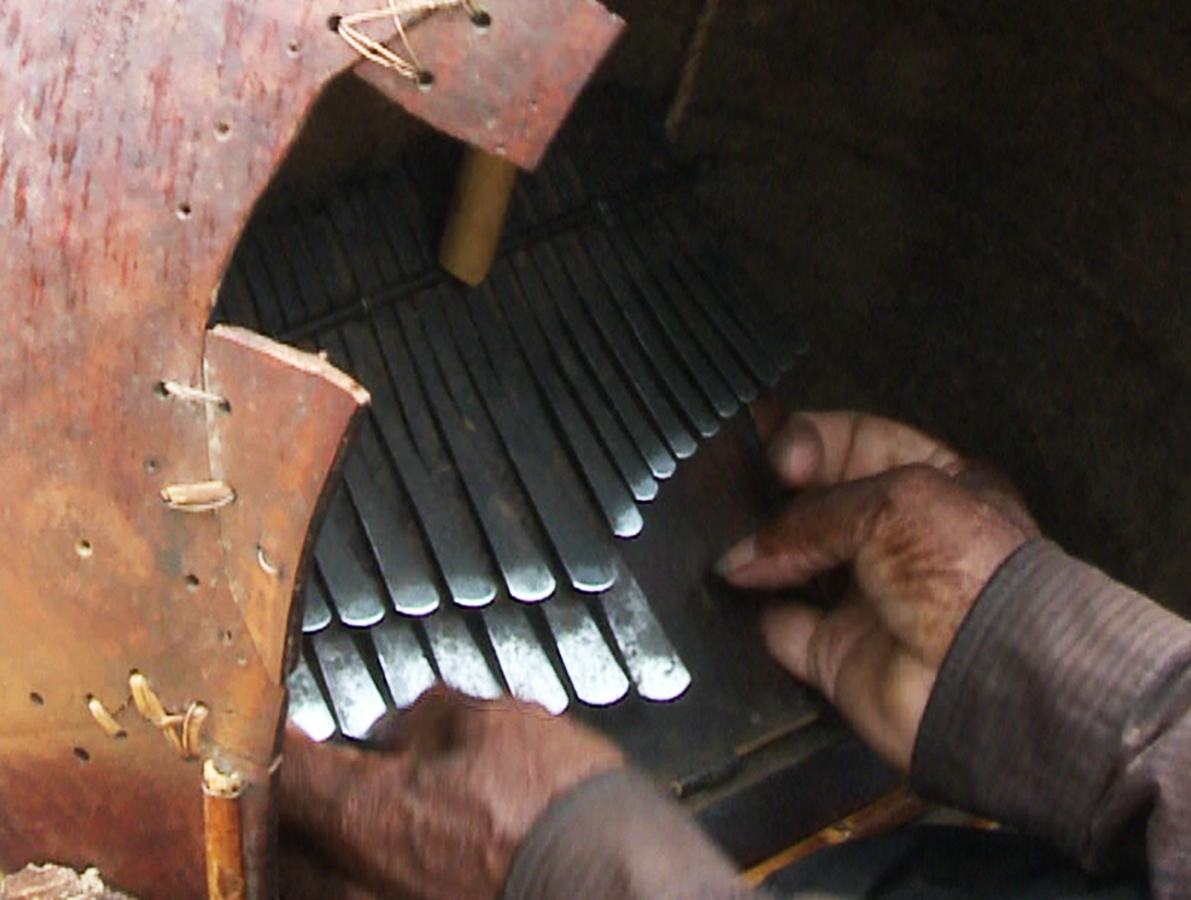
The 1970’s
In 1973, Mujuru went to work in Bulawayo in a hotel, but his heart told him that it was not the right place for him. While he was away at work, someone sold his instrument back home. As a result, the sickness that he had when he was two years old recurred. Modern medicine failed to treat him and he was only saved by buying a new mbira from Matidenha, a mbira maker from Murehwa. From then on, Zhanje realized that he could not stay without the mbira. He moved to Harare and started to play with his nephew Ephat Mujuru, and Erick and Mondrek Muchena.
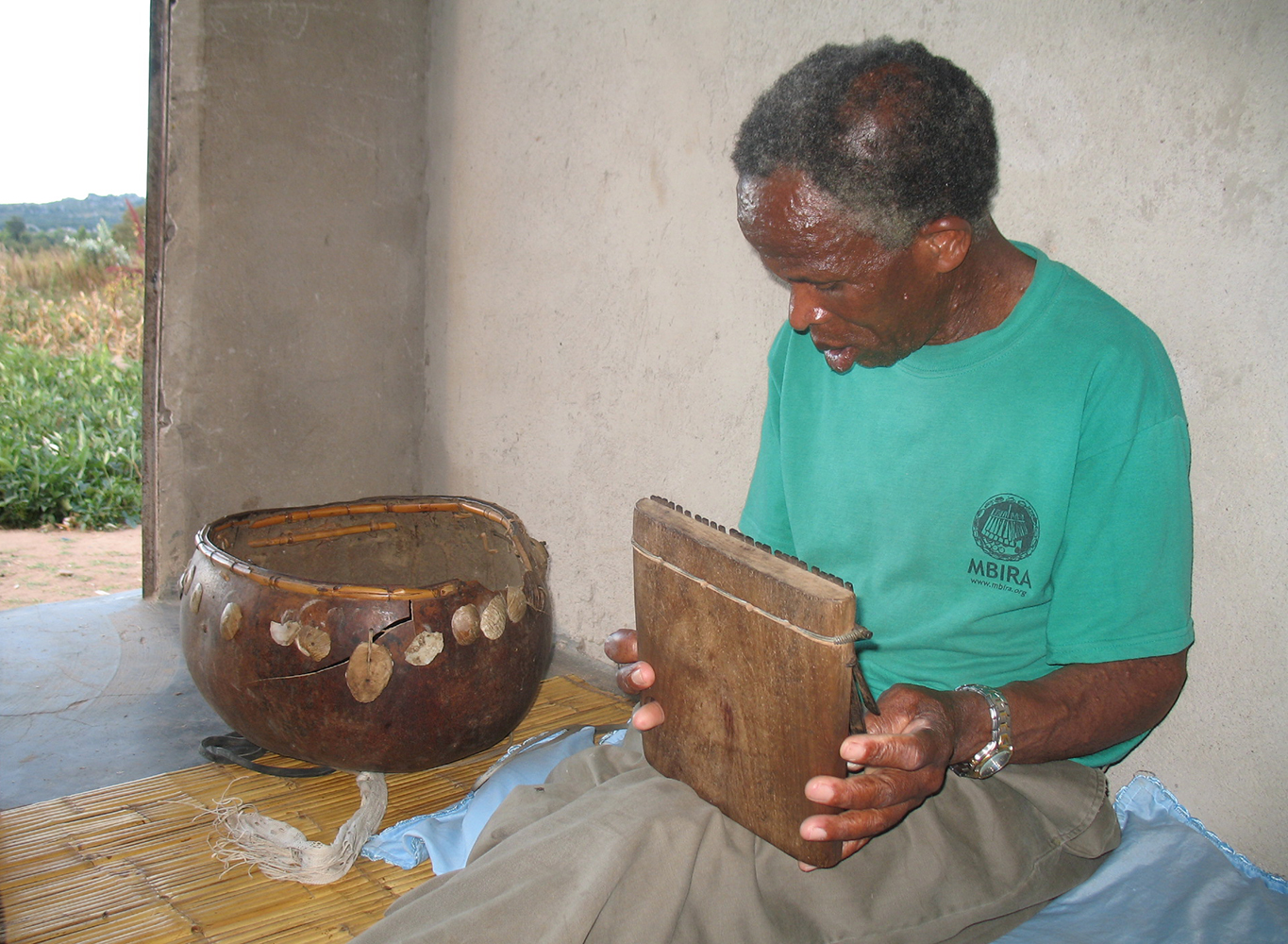
Commenting on the change of mbira from the sixties to the seventies, Mujuru strongly believes that the church and the Rhodesian government killed most of the traditional rituals that used to take place. The situation was worsened by the war of liberation, which displaced and killed many rural folk…and with them the old ways. Fungai’s own father was killed in the war, and this led to a temporary halt to the annual ceremonies at Dambatsoko. Fungai recalls the 1968-73 period bitterly, because some of the Westerners who came to do documentaries and record their music at his rural home “never paid a penny, but gained knowledge for their PhD’s and reputations”.
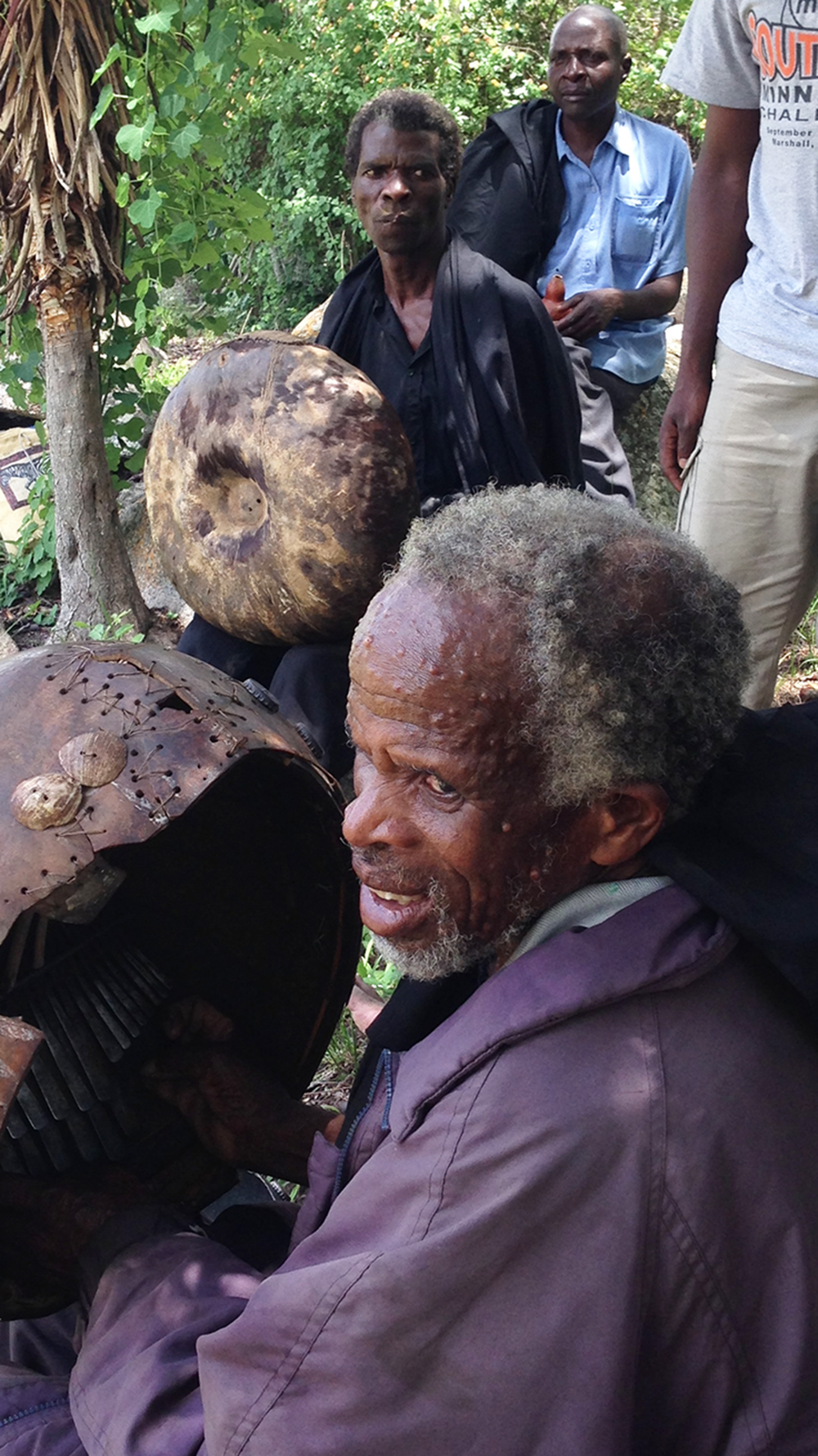
The 1980’s
The coming of Independence in 1980 revived the ceremonies at the village, and Mujuru has been in attendance ever since. In 1986, Fungai and Ephat Mujuru travelled to Sweden and recorded four albums. These may not have been released, as the Mujurus received no payment or royalties for them. Adding to their disappointment, their mbiras were stolen by jealous musicians in Chiredzi upon their return.
Fungai “Zhanje” Mujuru has recorded a video and an album with Ephat Mujuru and has appeared in numerous documentaries.
Tours with MBIRA
Zhanje made extremely popular appearances at the Zimbabwe Music Festival, MBIRA camps and more during his visits to the U.S. in 2004 and 2005 organized by MBIRA.
Home in the Village
From the time he left Bulawayo until now, Fungai has not worked for anyone – he plays mbira and pursues subsistence farming. He has managed to send his children to school through money from music sales and performances overseas and local ceremonies. Mujuru says that mbira is his survival stratagem. He is the senior mbira player of his village, and nurtures the younger generation of Mujuru village musicians, including in 2003: Admire, Augustine, Washington, Paradzai, Kudakwashe and Nyarai. Fungai reported that they play at ceremonies in the village during the elder musicians’ rest periods. “This way, what I learned will stay alive after I am gone”.